The problem
You know the āyah. You start it with confidence, the words flow — and a few words later you are somewhere else in the Qurʼān. Every word you said is a real word of the Book, so nothing sounded wrong. You were simply on the wrong road.
These are the mutashābihāt: āyāt that look and sound like one another, with a small difference that matters — a letter, a word, a change of order. Every memorizer meets them. In the text Qiraa works from, 988 āyāt — about 16% of all 6,236 — share their first four words with another āyah, and Qiraa’s look-alike index holds 2,451 twin pairs: āyāt that differ from another by a single edit.
This article is about the fork: finding the exact word where two look-alikes part, holding it, and testing it until your tongue takes the right road by itself. It ends with a four-week plan you can start with the portion you already hold.
What they are
What the mutashābihāt are, and why they catch you
The word comes from resemblance. Allah describes the whole Book with it: ﴿اللَّهُ نَزَّلَ أَحْسَنَ الْحَدِيثِ كِتَابًا مُّتَشَابِهًا مَّثَانِيَ﴾ — “Allah has sent down the best of speech: a Book consistent in itself, often repeated” (az-Zumar 39:23). The Qurʼān returns to its stories and its lessons, each time in words fitted to their place.
Two things share the name. In Āl ʿImrān 3:7, ﴿وَأُخَرُ مُتَشَابِهَاتٌ﴾ speaks of āyāt whose meaning is not plain to everyone. Memorizers use the word for something else: āyāt whose wording resembles each other. This article is about that second kind.
Why do they catch good memorizers? Because recitation from memory runs on momentum. Each phrase pulls the next one after it, and when one opening leads to two endings, the stronger path wins — usually the one you learned first, or recite most. You do not choose the wrong road. You are carried onto it.
And because every word is real, a listener without the page may not notice either. The mistake is not in your pronunciation; it is in your place. Scholars wrote whole books on these verbal look-alikes, and teachers of hifz have long passed on short rhymes to hold them. To begin, you need less: your own list, and a way to work through it.

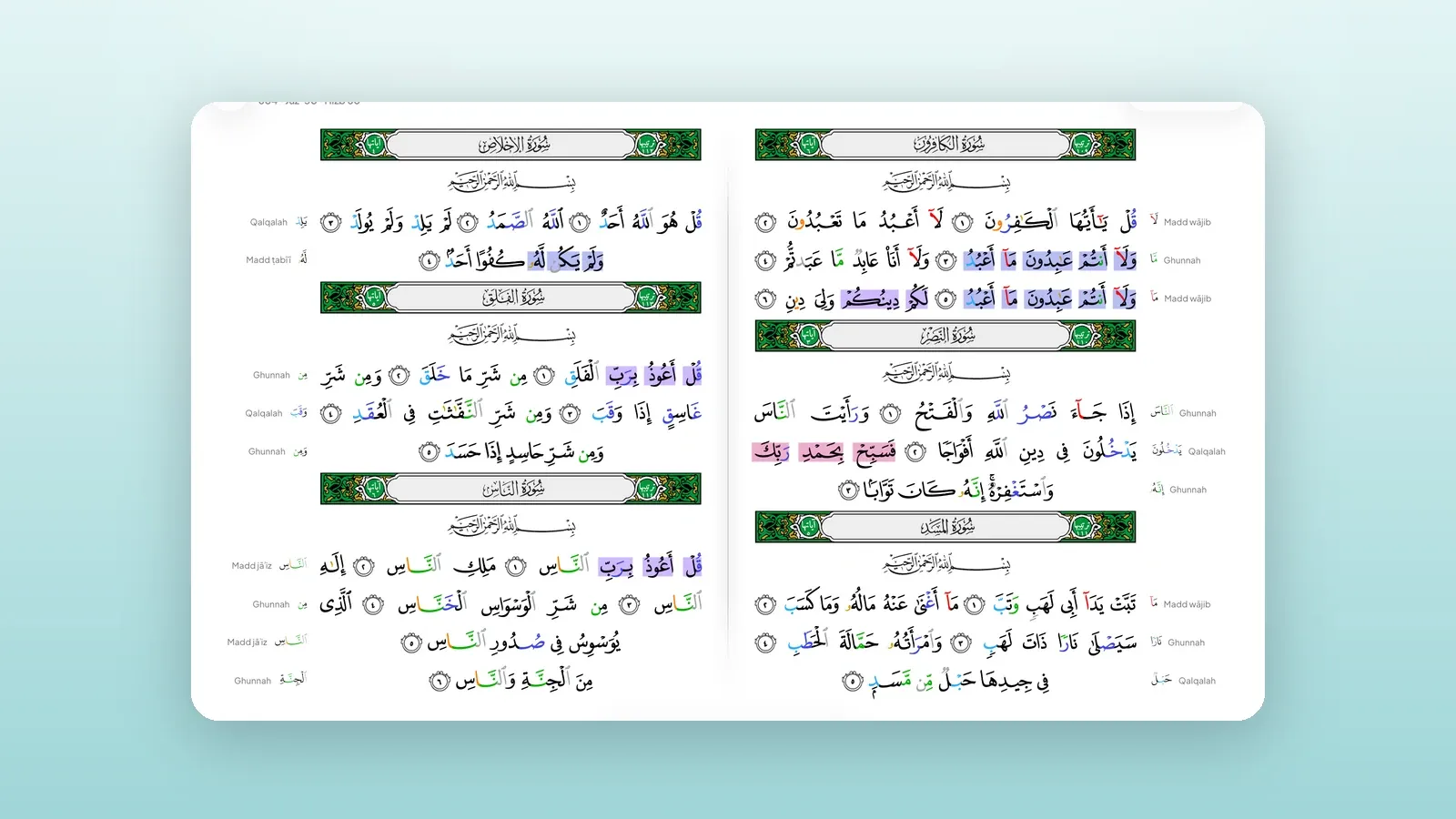
On the reading page, Tools › Similar phrases tints the words that come back elsewhere — here the returning lines of Al-Kāfirūn.
Six real pairs
Six real look-alikes, and where each one parts
Read these slowly, aloud, with a muṣḥaf open. For each pair: the shared road, and the fork.
1. Ādam in the Garden: al-Baqarah 2:35 and al-Aʿrāf 7:19
- al-Baqarah 2:35: ﴿وَقُلْنَا يَا آدَمُ اسْكُنْ أَنتَ وَزَوْجُكَ الْجَنَّةَ وَكُلَا مِنْهَا رَغَدًا حَيْثُ شِئْتُمَا﴾
- al-Aʿrāf 7:19: ﴿وَيَا آدَمُ اسْكُنْ أَنتَ وَزَوْجُكَ الْجَنَّةَ فَكُلَا مِنْ حَيْثُ شِئْتُمَا﴾
Where they part: al-Baqarah opens with وَقُلْنَا, al-Aʿrāf with وَيَا. Then وَكُلَا مِنْهَا رَغَدًا against فَكُلَا مِنْ — a different first letter, and two words al-Aʿrāf does not have. After that, both āyāt end the same way, which is exactly what makes the forks easy to forget.
2. The town: al-Baqarah 2:58 and al-Aʿrāf 7:161
- al-Baqarah 2:58: ﴿وَإِذْ قُلْنَا ادْخُلُوا هَٰذِهِ الْقَرْيَةَ فَكُلُوا مِنْهَا حَيْثُ شِئْتُمْ رَغَدًا﴾
- al-Aʿrāf 7:161: ﴿وَإِذْ قِيلَ لَهُمُ اسْكُنُوا هَٰذِهِ الْقَرْيَةَ وَكُلُوا مِنْهَا حَيْثُ شِئْتُمْ﴾
Where they part: the second word. قُلْنَا ادْخُلُوا, “We said: enter”, against قِيلَ لَهُمُ اسْكُنُوا, “it was said to them: dwell”. Then فَكُلُوا against وَكُلُوا. One hook you can use: you enter first and eat after, so “enter” is followed by fa; dwelling and eating go on together, so “dwell” is followed by wa. The two āyāt keep parting after that — وَادْخُلُوا الْبَابَ سُجَّدًا and وَقُولُوا حِطَّةٌ come in the opposite order, and خَطَايَاكُمْ becomes خَطِيئَاتِكُمْ — so learn each one whole.
3. Twice in one sūrah: al-Baqarah 2:48 and 2:123
Both open with the same eleven words: ﴿وَاتَّقُوا يَوْمًا لَّا تَجْزِي نَفْسٌ عَن نَّفْسٍ شَيْئًا وَلَا يُقْبَلُ مِنْهَا﴾. Then:
- al-Baqarah 2:48: ﴿شَفَاعَةٌ وَلَا يُؤْخَذُ مِنْهَا عَدْلٌ﴾
- al-Baqarah 2:123: ﴿عَدْلٌ وَلَا تَنفَعُهَا شَفَاعَةٌ﴾
Where they part: the twelfth word. In the first, intercession is not accepted and ransom is not taken; in the second, ransom is not accepted and intercession does not benefit. Learn which comes first in which, and the verbs follow.
4. One rescue, three places: al-Baqarah 2:49, al-Aʿrāf 7:141, Ibrāhīm 14:6
- al-Baqarah 2:49: ﴿وَإِذْ نَجَّيْنَاكُم مِّنْ آلِ فِرْعَوْنَ يَسُومُونَكُمْ سُوءَ الْعَذَابِ يُذَبِّحُونَ أَبْنَاءَكُمْ﴾
- al-Aʿrāf 7:141: ﴿وَإِذْ أَنجَيْنَاكُم مِّنْ آلِ فِرْعَوْنَ يَسُومُونَكُمْ سُوءَ الْعَذَابِ يُقَتِّلُونَ أَبْنَاءَكُمْ﴾
- Ibrāhīm 14:6: ﴿… إِذْ أَنجَاكُم مِّنْ آلِ فِرْعَوْنَ يَسُومُونَكُمْ سُوءَ الْعَذَابِ وَيُذَبِّحُونَ أَبْنَاءَكُمْ﴾
Where they part: twice. First the verb of rescue: نَجَّيْنَاكُم, أَنجَيْنَاكُم, أَنجَاكُم. Then what was done to the sons: يُذَبِّحُونَ, يُقَتِّلُونَ, and وَيُذَبِّحُونَ with a wāw. The speaker is the key. In the first two, Allah says “We saved you”; in Ibrāhīm, Mūsā is reminding his people — ﴿اذْكُرُوا نِعْمَةَ اللَّهِ عَلَيْكُمْ﴾ — so it is “He saved you”.
5. Glad tidings: Āl ʿImrān 3:126 and al-Anfāl 8:10
- Āl ʿImrān 3:126: ﴿وَمَا جَعَلَهُ اللَّهُ إِلَّا بُشْرَىٰ لَكُمْ وَلِتَطْمَئِنَّ قُلُوبُكُم بِهِ﴾
- al-Anfāl 8:10: ﴿وَمَا جَعَلَهُ اللَّهُ إِلَّا بُشْرَىٰ وَلِتَطْمَئِنَّ بِهِ قُلُوبُكُمْ﴾
Where they part: right after بُشْرَىٰ. Āl ʿImrān adds لَكُمْ and puts قُلُوبُكُم before بِهِ; al-Anfāl has no لَكُمْ and puts بِهِ first. The endings part too: ﴿الْعَزِيزِ الْحَكِيمِ﴾ in Āl ʿImrān, ﴿إِنَّ اللَّهَ عَزِيزٌ حَكِيمٌ﴾ in al-Anfāl.
6. The same āyah twice in Juzʼ ʿAmma: al-Infiṭār 82:13 and al-Muṭaffifīn 83:22
Sometimes two āyāt are word for word the same, and the fork is in the āyah after. ﴿إِنَّ الْأَبْرَارَ لَفِي نَعِيمٍ﴾ is al-Infiṭār 82:13, and also al-Muṭaffifīn 83:22. Then:
- al-Infiṭār 82:14: ﴿وَإِنَّ الْفُجَّارَ لَفِي جَحِيمٍ﴾
- al-Muṭaffifīn 83:23: ﴿عَلَى الْأَرَائِكِ يَنظُرُونَ﴾
Where they part: at the start of the next āyah. Al-Infiṭār sets the righteous beside the wicked in two short lines; al-Muṭaffifīn stays with the righteous and describes their reward. The two sūrahs sit side by side in the muṣḥaf, which is why children learning Juzʼ ʿAmma so often slide from one into the other.
Five techniques
Five techniques teachers have always used
None of these is new. They are what hifz teachers have done in circles for generations, written out so you can do them alone.
1. Find the parting word, and mark it
For every pair, find the first word where they part — exactly, not roughly. Write the two āyāt one above the other and underline the fork. Most confusion lives in one or two words; once you can see them, you have something to hold.
2. Anchor each āyah in its place
Look-alikes rarely share their neighbours, so the āyah before is often what tells you which road you are on. When you revise, never start a look-alike cold: begin one āyah earlier, and let the context carry you to the right fork.
3. Use the meaning, and the sūrah’s own story
Each version belongs where it is. Read the meaning of both: who is speaking, to whom, and what the passage is about. In the fourth pair above, the speaker alone tells you the verb. When you know which story you are in, its words come more easily.
4. Recite the pair side by side
Recite the two āyāt one after the other, slowly, three times — then in the other order. You are teaching your tongue that the shared road has two exits, and which exit belongs to which place. Do it with the muṣḥaf open first, then from memory.
5. Test them on purpose
Most slides happen when you are not thinking about them, so think about them. Ask a listener to give you the āyah before and let you go on, mixing the two places in random order. If you take the right fork from either side, every time, the pair is held. If not, it goes back on your list.
And keep the list. Each time you slide, write the pair down. It will be shorter than you fear: most people trip on the same few forks again and again.
How Qiraa helps
How Qiraa helps you see the fork
We build Qiraa, so this section is about our own app, and we will keep it to what it does.
Look-alikes, from any āyah
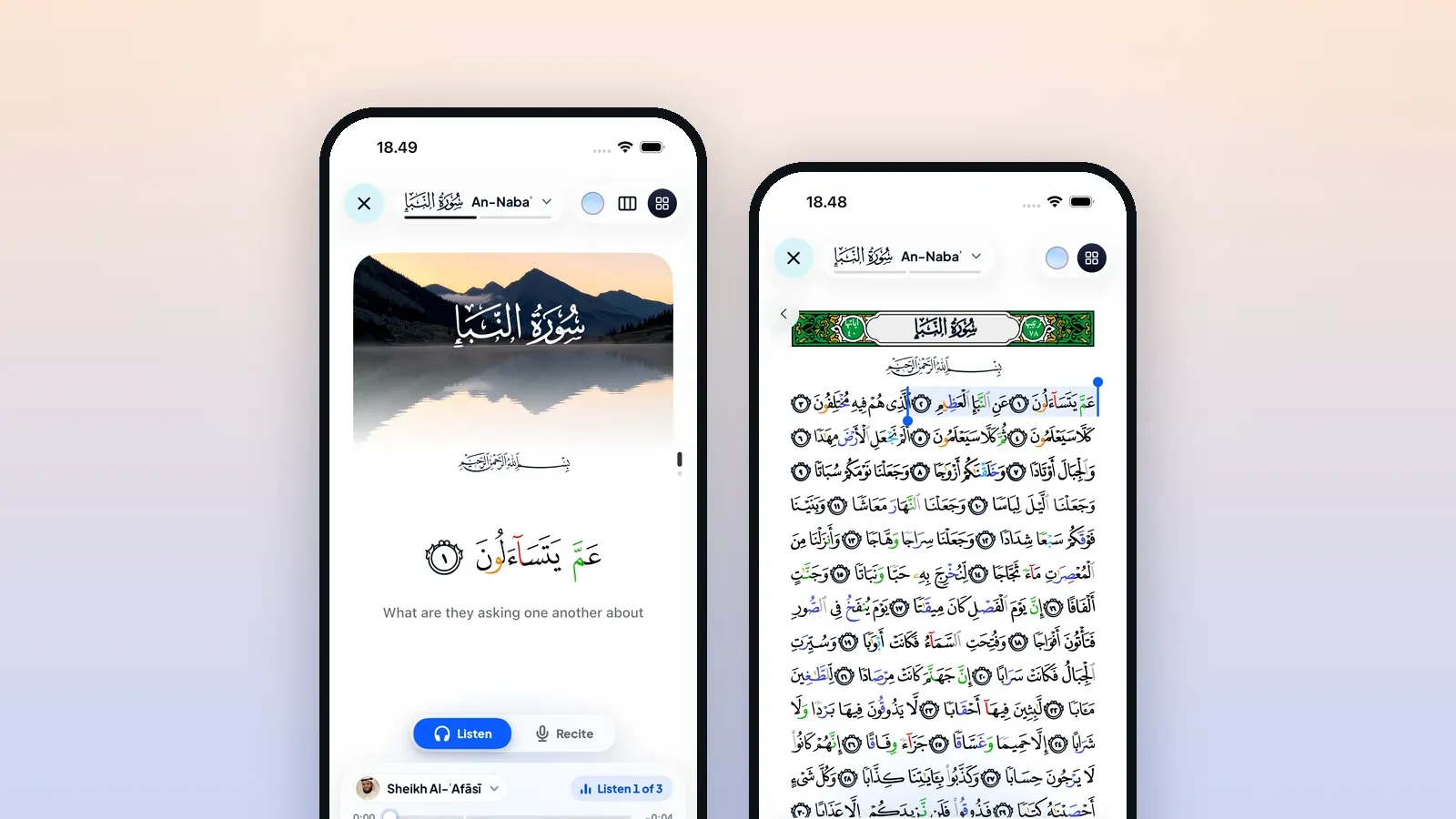
On the reading page, press and hold an āyah. When it has look-alikes, the menu offers Look-alikes, with a count. It shows the āyāt like this one, their shared words in one colour and the forks marked: “In blue, where this āyah parts; on grey, where the other does.” Where two āyāt are the same to the end, it says “Then the next āyāt part” and shows you where. And beside a look-alike you once slid into, a note says “You said this”, with the date.

Press and hold an āyah and open Look-alikes: the āyāt that share its words, the shared words tinted, the meaning beneath.
A slide is marked, and named
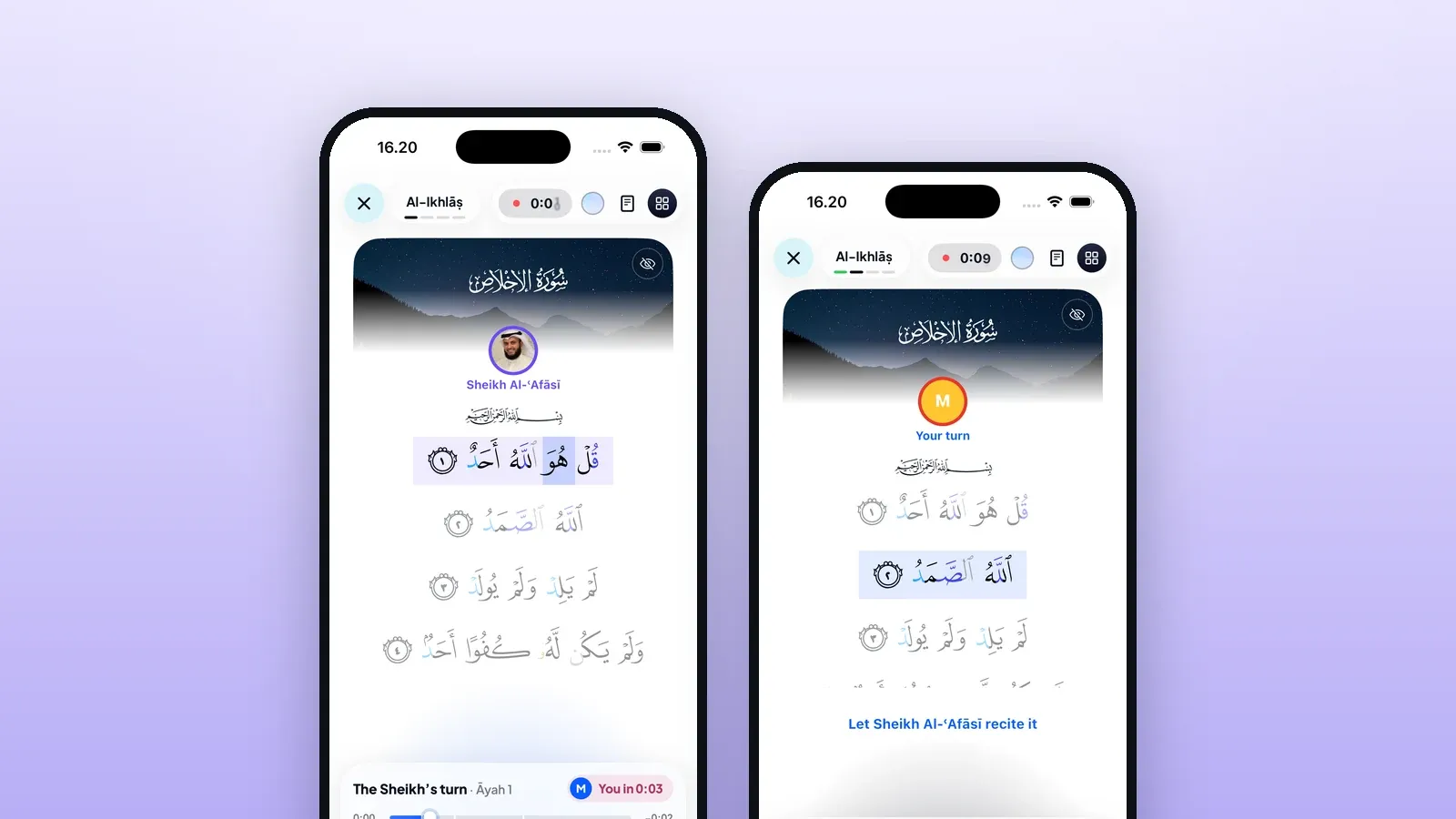
When you Recite, Qiraa follows you word by word. If you slide into a look-alike, the word is marked like any slip — an amber dotted line on a soft amber wash — and a short line can tell you where you went and how this āyah goes on: “That was … — here it goes on: …”. Tap the marked word afterwards, and the card names the place: “Sounds like Al-Aʿrāf 7:19”. Because the index knows the twins, a jump into a look-alike is told apart from a mispronounced letter. Qiraa keeps each pair you slide into, so your mix-ups become your list.
Colour look-alikes, in the Hifz trainer
In Memorize, open Settings and, under On the card, turn on Colour look-alikes: “Words other āyāt share, and the word where this one parts.” It stays off until you turn it on. With it on, you meet the fork on the first day you learn an āyah, not a month later.
Drill them apart
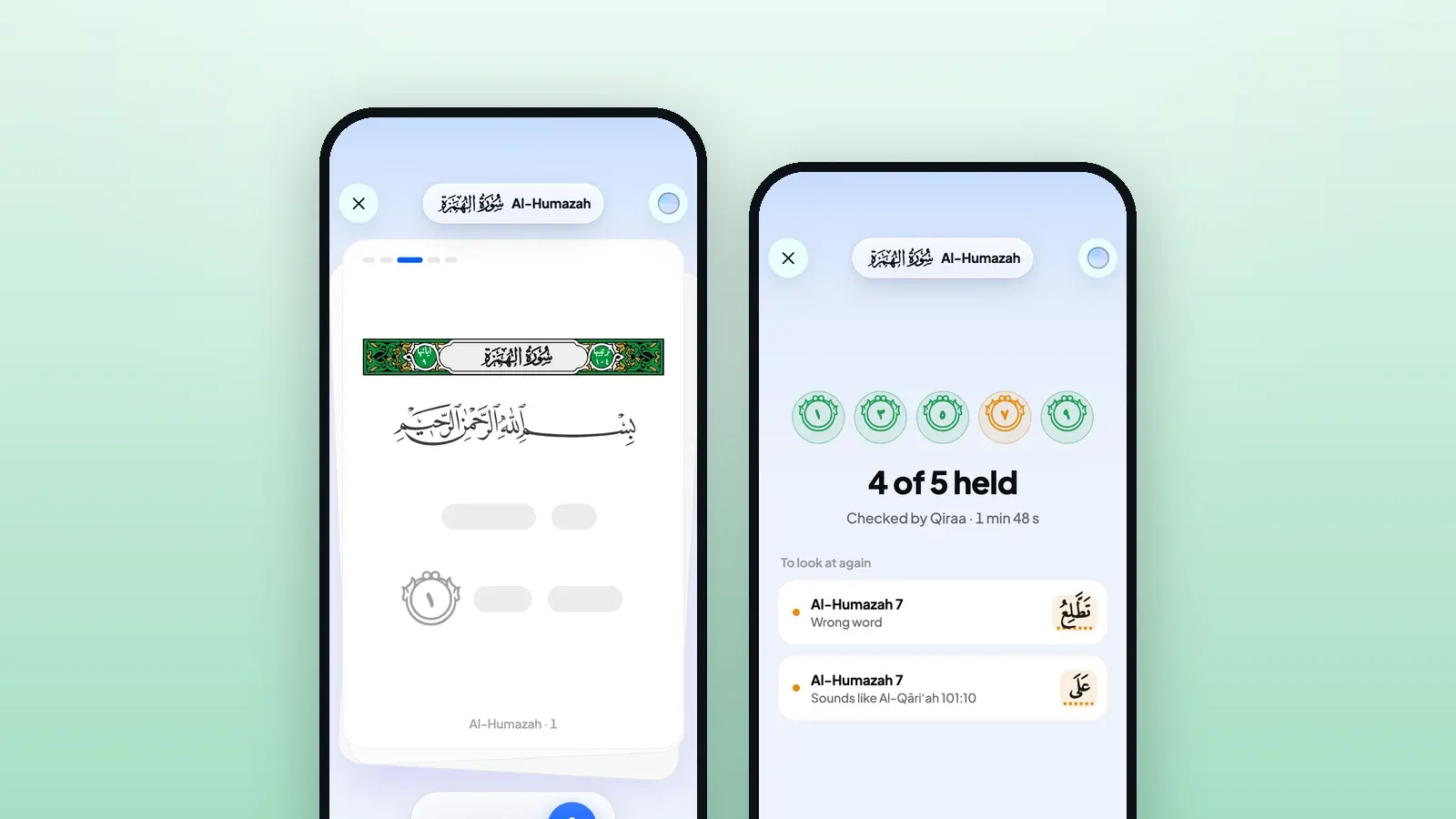
Where the āyāt fork, the Look-alikes card ends with Drill them apart. It opens Tell them apart: a short test over that āyah’s look-alikes. Each card is one of them, cued by its own āyah before — the context that tells them apart — and you recite it from memory: “Say each look-alike its own way.” Said its own way, a card is Told apart; a slide into its twin is Mixed up. At the end: “Told apart 3 of 4”. Every mix-up it hears joins your list.

Drill them apart opens Tell them apart: each card is one of the twins, and the result names any you mixed up.
None of this replaces a teacher’s ear. It is a way to find your forks, see them clearly, and test them more often than a weekly lesson allows.
A four-week plan
A four-week plan
Use the portion you already hold: this plan is for look-alikes you have met, not āyāt you have yet to memorize. About fifteen minutes a day, beside your normal review.
Week 1 · Collect
- Go through your portion āyah by āyah. Wherever the reader offers Look-alikes, open it and see where the āyāt part.
- Write each pair one above the other, and underline the parting word.
- In Memorize, turn on Colour look-alikes, so new lessons show their forks from the start.
- Recite your portion once with Recite, and add every pair you slid into.
Week 2 · Anchor
- For each pair, read the meaning of both āyāt, and the āyah before each.
- Beside each, write one line: who is speaking, and what the passage is about.
- Revise every look-alike starting one āyah earlier, never cold.
Week 3 · Side by side
- Each day, take three to five pairs. Listen to the Sheikh recite both, then recite them side by side three times, then in the other order.
- Run Drill them apart on each.
- A pair you get right three days running moves to a “held” page.
Week 4 · Test on purpose
- Recite each passage that holds a look-alike from memory, with the words hidden, and let Qiraa follow.
- Ask a listener — a teacher, a friend in a Halaqah, a parent — to start you from the āyah before, in mixed order.
- Anything still mixed up goes back to week 3; the rest joins your normal review.
After four weeks, keep the list alive. When you slide again — and now and then you will — add the pair. A list that grows a little is a list that is working.
A word of encouragement
A slide is not a failure
Sliding into a look-alike does not mean your hifz is weak. It means you hold both āyāt well enough for one to call the other. And the Prophet ﷺ said that the one who recites the Qurʼān and stumbles over it, finding it hard, has two rewards (Muslim 798).
Keep a teacher in the picture. Qiraa cannot grant an ijāzah, and it does not replace a qualified teacher’s ear. Bring your list to your teacher: few things are more useful for them to hear you recite.
Questions
Questions people ask about look-alike āyāt
What are mutashābihāt in Qurʼān memorization?
Āyāt whose wording closely resembles another āyah, with a small difference: a letter, a word, or a change of order. Memorizers call them mutashābihāt, the verbal look-alikes. In the text Qiraa works from, 988 āyāt — about 16% — share their first four words with another āyah.
Why do I keep mixing up similar āyāt?
Recitation from memory runs on momentum: a shared opening pulls you onto the road you know best. Every word you say is a real word of the Qurʼān, so nothing sounds wrong. The cure is to find the exact parting word, anchor each āyah in its context, and test the pair on purpose.
Should I learn look-alikes together or apart?
Learn each in its own place first, with the āyāt around it. Once both are held, bring them together: recite them side by side, then test them in mixed order. Meeting the fork early helps, which is why Colour look-alikes in Qiraa shows it while you learn.
How does Qiraa help with look-alike āyāt?
Press and hold an āyah on the reading page and open Look-alikes to see where it parts from its twins. In Memorize, Colour look-alikes marks the shared words and the parting word on the card. When you recite, a slide into a look-alike is marked and named — “Sounds like …” — and Drill them apart tests you on the pair.
Will I ever stop mixing them up?
Most pairs settle with focused work and steady review, and a few come back now and then for years. That is normal, even for people who have held the Qurʼān a long time. Keep your list, and return to it.
Can an app replace a teacher for this?
No. An app can show you the fork and test you more often than a weekly lesson allows, but it cannot grant an ijāzah or replace a qualified teacher’s ear. Your list of look-alikes is one of the most useful things to bring to a teacher.